

I’m not saying mammography doesn’t matter. If you ever find a lump or notice a change, it still can be one of our best tools for figuring out what’s going on. What I am asking is simpler: is a yearly mammogram automatically the right screening plan for every woman, no matter her risk or her breast tissue? Dr. Jenn Simmons, a former breast surgeon who left conventional practice after her own thyroid cancer diagnosis, has raised this same question. Below, we’ll walk through the data, talk about what actually raises (and lowers) your risk, and introduce a couple of newer tools worth knowing about.
Does Mammography Save as Many Lives as We’re Told?
Mammography became standard practice in the 1980s. But whether it truly lowers the number of women who die from breast cancer has been debated by researchers for almost just as long.
The most rigorous studies we have on mammography, including those reviewed by the highly respected independent research group Cochrane, found something surprising: in trials with the best study design, mammography did not significantly lower breast cancer deaths. Only the less carefully done trials showed a benefit, and those are the type of studies more likely to be biased in favor of screening (Gøtzsche & Jørgensen, 2013).
A newer study looked at this from another angle. It found that women who get regular mammograms don’t just have lower breast cancer deaths. They also have lower deaths from everything, at almost the same rate. That pattern suggests healthier, more resourced women are simply more likely to both get screened and live longer, not that the mammogram itself is driving the difference (Autier et al., 2024).
Here’s a number Dr. Simmons often points to: about 42,000 American women still die of breast cancer every year, and that number hasn’t moved much since mammograms became routine, even though we’re finding and diagnosing far more cancers than we used to (Cole, 2026). To her, that’s a sign we’ve gotten better at finding cancer, not necessarily better at stopping it from being fatal. To be fair, not everyone interprets the data this way. The American Cancer Society and U.S. Preventive Services Task Force still recommend mammograms, citing other studies that estimate a meaningful benefit, especially for women in their 50s and 60s (National Breast Cancer Coalition, 2021). The bottom line is that this remains a genuinely unsettled question among researchers, not a closed case, and I think you deserve to know that.
The Elephant in the Room: Radiation
Here’s something that often gets glossed over. Ionizing radiation, the kind used in mammograms, is a known cause of cancer. Not a “maybe.” The world’s leading cancer research agency, the International Agency for Research on Cancer, puts it in its highest-certainty category of things proven to cause cancer in humans (IARC, 2012).
A mammogram works by aiming that radiation directly at breast tissue. And for many women, that happens once a year (or every other year) for 30 or 40 years. That’s very different from getting an occasional X-ray for a broken bone.
Researchers have actually tried to put numbers on this. Two well-known studies estimate that for every 100,000 women who get annual mammograms from age 40 to 74, the radiation itself will cause somewhere between 86 and 125 breast cancers, and 11 to 16 breast cancer deaths, over their lifetimes (Miglioretti et al., 2016; Yaffe & Mainprize, 2011). Those same researchers conclude the benefit still outweighs this harm overall, but it is a real, measurable cost, not a fringe worry. Women may reasonably weigh it differently depending on their own risk.
This risk also isn’t spread evenly. Two things stack up for some women. First, breast size is the biggest factor in how much radiation a mammogram uses, but density plays a real, independent role too, even after accounting for size (Nguyen et al., 2018). Second, dense breast tissue is also an independent risk factor for developing breast cancer in the first place. Women with the densest breasts have roughly double the risk of women with the least dense (Bodewes et al., 2022). Put together, some women may be getting more radiation while already carrying more baseline risk. That’s the piece I think gets left out of the standard “just get your yearly mammogram” advice.
Know Your Risk and What You Can Change
Screening often gets talked about as if it were prevention. It isn’t. A mammogram can help catch a cancer that already exists, but it can’t stop one from forming. True prevention means addressing what actually causes breast cancer to develop, and the good news is that a real share of that is within your control.
You can’t change: your age, a family history of breast cancer, or an inherited gene mutation like BRCA1/2 (Cohen et al., 2023).
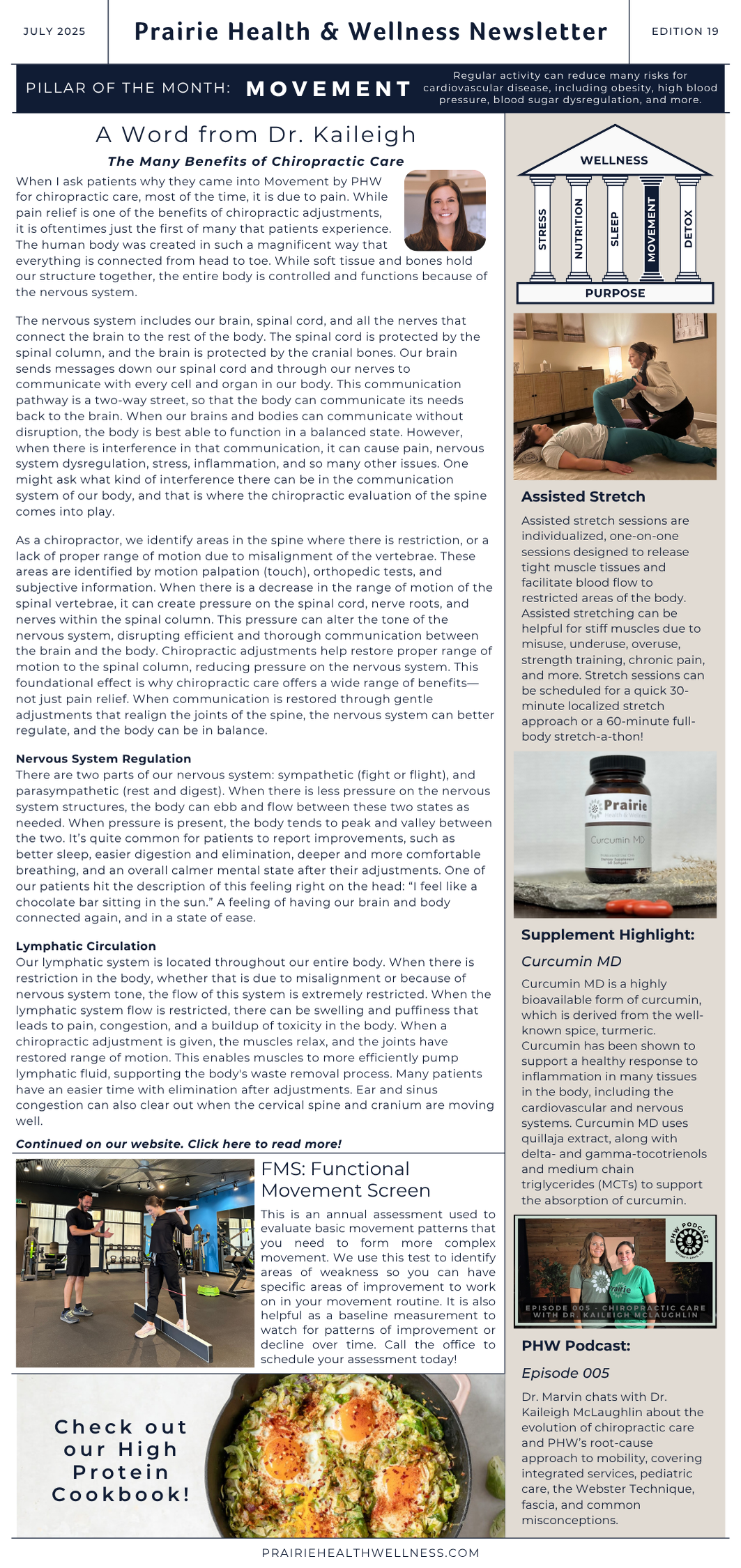
A quick note on breast density. Density isn’t entirely fixed. Drinking less alcohol is one of the clearest ways to lower it (Lester et al., 2022). Hormone therapy can raise it too (Lester et al., 2022). That’s not a reason to avoid it, since it’s a valuable, well-established treatment health care providers prescribe often, but it is a reason to also support how well your body processes estrogen, which is where we at PHW can help.
This gets at something called “estrogen dominance.” To be clear, estrogen itself isn’t the enemy. It’s a normal, essential hormone, which is exactly why puberty, pregnancy, and healthy menstrual cycles don’t cause cancer. What matters is whether your body is efficiently clearing what it makes (or what a therapy adds), and how much chronic inflammation is present alongside it. When estrogen lingers longer than it should, maybe because clearance pathways are sluggish or when it’s acting inside a body already dealing with chronic low-grade inflammation, that combination is what mainstream research increasingly points to as a real driver of risk, not estrogen exposure on its own (Iyengar et al., 2013).
Estrogen clearance happens through a couple of different pathways in the liver, and they don’t all produce the same byproducts: some are fairly inert, while others behave more actively in breast tissue (Lord et al., 2002). Some studies have linked a body that favors the more inert byproduct with lower breast cancer risk, so this is a real area of research, though not a settled one (Muti et al., 2000; Lord et al., 2002). What’s better supported is that certain foods can nudge that balance in a favorable direction: cruciferous vegetables like broccoli, cauliflower, Brussels sprouts, and kale contain a compound shown in human studies to do exactly that (Michnovicz & Bradlow, 1991; Lord et al., 2002). Supporting efficient estrogen clearance and calming chronic inflammation through food, liver health, and gut health is something I build into care plans, regardless of whether someone is on hormone therapy.
Childhood trauma is part of this picture too. A growing body of research links a higher number of adverse childhood experiences (ACEs), things like abuse, neglect, or a chaotic home environment, to increased breast cancer risk later in life. The studies that looked for a mechanism found elevated inflammatory markers in people with more ACEs (Pino et al., 2022). This is still an early field of research, and it isn’t fully separated yet from related factors like adult weight or smoking, but it fits the same inflammation story we’ve described above, and it’s a big part of why I ask about your whole history, not just your labs.
You can influence:
- Alcohol. Even light, regular drinking raises breast cancer risk, and more alcohol means more risk (American Cancer Society, 2026b). This is one of the most solid, and most overlooked, risk factors there is.
- Extra weight after menopause. After menopause, fat tissue becomes your body’s main source of estrogen, and fat tissue also drives chronic low-grade inflammation. Together, that combination (not estrogen alone) is linked to higher breast cancer risk (American Cancer Society, 2026b; Iyengar et al., 2013).
- Inactivity. Regular movement and less sitting are both linked to lower risk (American Institute for Cancer Research, 2023).
- Breastfeeding. When possible, lowers lifetime risk (American Institute for Cancer Research, 2023).
- Metabolic health. Insulin resistance and chronic inflammation are two of the clearest, best-supported drivers connecting metabolic health to breast tissue growth, so the blood sugar, thyroid, and inflammation work I already do in my practice supports breast cancer risk reduction too. This is a place where functional medicine and mainstream research genuinely agree (Iyengar et al., 2013).
Major health organizations estimate a meaningful share of breast cancers could be prevented through factors like these alone (American Institute for Cancer Research, 2023). That’s worth a conversation at your next visit alongside, not instead of, your screening plan.
Reclaiming the Power of Self-Exams
Long before mammograms existed, women found their own cancers by paying attention to their bodies. That instinct still matters. Official guidance has shifted here, though: the American Cancer Society no longer recommends a formal monthly exam as a stand-alone screening method, since the evidence that it lowers deaths on its own is limited. Instead, they recommend simply knowing what’s normal for your body (American Cancer Society, 2026a). I think both matter: knowing your body, and having a simple way to check it.
How to do a breast self-exam:
- Look. In front of a mirror, arms at your sides and then raised overhead, check for changes in size, shape, skin, or the nipple.
- Feel lying down. Pillow under one shoulder, that arm behind your head. Use the pads of your three middle fingers in small circles, covering the whole breast from collarbone to bra line, armpit to breastbone.
- Feel standing up. The shower works well for this, as wet, soapy skin is easier to check.
- Check the nipple for any discharge with a gentle squeeze.
When: Day 7 of your cycle if you’re still menstruating (day 1 being the first day of your period). If you’re postmenopausal, just pick the same date each month (Down To Birth Show, 2025). Tell your provider about any new lump, thickening, or change. There are several common causes for changes like this, but any new lump, thickening, or change should always be discussed with your provider.
Two Newer Tools Worth Knowing About
QT Imaging. This uses sound waves, not radiation, to build a 3D picture of the breast, with no compression involved (Malik et al., 2016). It’s FDA-cleared for measuring breast density and is used alongside mammography, but it is not approved to replace mammography for screening (QT Imaging, n.d.). It’s worth a conversation with your provider if you’re radiation-averse or can’t tolerate compression.
The Auria (tears) test. This at-home test checks two proteins in your tears that tend to be higher in women with breast cancer (Daily et al., 2022). In studies, it caught breast cancer roughly 52–90% of the time and correctly ruled it out 31–79% of the time, depending on the version tested (Daily et al., 2022). This means it can still miss cancers or flag false alarms, like any test. It’s designed to supplement mammography for average-risk women, not replace it (Namida Lab, n.d.).
A quick note on thermography, since I get asked about it often: I don’t recommend it as a stand-alone for breast cancer screening. It measures skin temperature, not breast tissue itself, and the FDA has repeatedly warned that there’s no valid scientific data showing it works as a stand-alone screening tool. It also has a notably high false-negative rate, meaning real cancers can be missed (U.S. Food and Drug Administration, 2019). If you’re looking for a radiation-free option, QT imaging above is the one I can actually stand behind.
Our Take
If you find a lump, mammography still has an important role. What I want you to question is whether yearly mammograms for every woman, regardless of her personal risk, is really the one-size-fits-all answer it’s often presented as. The science is more debated than most people realize. Your own hands are a screening tool too. And a real share of your risk is something you can actually change, not just something to catch early.
Breast health isn’t one test. It’s self-awareness, informed screening choices, real prevention through lifestyle, and an honest conversation with a provider who has time to listen. That’s what we’re here for.
If you’d like to talk through your own risk and screening plan, including whether QT imaging or the Auria test makes sense for you, bring it up at your next visit.